


A city’s emergency control room faces a similar problem in a different shape: radio chatter on one line, a satellite feed on another, IP calls on a third, all live and all needing to reach the same person without delay or static.
These aren’t call center problems. They’re mission-critical communication problems, and most organizations are still trying to solve them with regular PBX systems built for a different job entirely.
That’s the gap Unicom Infotel works in. We design and deploy dispatch and trading turret systems, one of the most capable classes of communication infrastructure available today and one of the least understood in India. We don’t sell a box off a shelf. We scope, configure, and stand up a system built around how your floor or control room actually operates.

Why a Regular Phone System Doesn't Cut It
The difference between a call center and a trading desk gets conflated more often than it should. A call center agent has calls routed to them. They answer, resolve, and disconnect. The decision of who to speak to next isn’t theirs to make; it’s a linear, managed flow.
A trader doesn’t get that luxury. They may be facing over a hundred inbound calls at once, and they decide who gets picked up first, because a high-value client waiting in the queue can’t be treated the same as a routine call.
That’s a different communication problem, and it needs different hardware and software to match, along with a partner who understands the difference well enough to architect around it rather than just install around it.
Use Case 1: Trading Floors (BFSI, Manufacturing, Defense)
The systems we deploy are built for how traders actually work:
- Push-to-talk and mute across multiple simultaneous lines, so a trader juggling several conversations isn’t stuck toggling calls on hold.
- Line sharing and conferencing, with the ability to jump in or out of a call without disrupting it.
- Instant ad-hoc conferencing, which matters more than it sounds like it should. About 90% of a trader’s conferences are unplanned. On a regular system, adding a third person means silence or hold music while everyone waits. On the systems we deploy, the first two participants keep talking while the third joins in the background, with no dead air and no wasted time.
- 99.99% uptime, because on a trading floor, downtime isn’t an inconvenience, it’s a missed trade.
- Full SEBI-compliant call recording, archived for 7 years, with a dedicated recording solution and backup.
Even the hardware reflects how traders work under pressure. Most prefer a “dumb” handset over a smart one: no screen to glance at, no menu to navigate, just physical buttons they can hit without looking for push-to-talk, mute, and volume. When a trader is done with a call, they don’t hang up so much as drop the handset back onto a magnetic cradle that disconnects the instant it’s set down. That sounds minor until you multiply it out. Shaving a few seconds off every call, across a full day of trading, adds up to roughly 3.5 minutes saved per trader per day. Across a full desk, that’s a meaningful amount of time.
A trader’s desk today typically has a cluster of handsets, one for each line, because no single device can hold everything they need at once. The systems we design change that. A single turret can carry thousands of speed-dial contacts and hundreds of live lines, so instead of reaching for a different phone for every client, everything is one button away, organized across pages a trader can flip through as fast as the market moves.
Entire dealing rooms, thousands of turrets, can run on one connected system, so a firm doesn’t outgrow the platform as its desk scales. A browser sits on the terminal for quick lookups. A Bluetooth handset means the trader isn’t tethered to the desk. Dual Ethernet keeps the connection from hiccuping mid-trade. There’s a hotline feed for background news audio, since information is currency even when it’s playing quietly in the corner of the room. And it plugs directly into Microsoft Teams, so the trading desk isn’t cut off from how the rest of the business communicates.
Why the Architecture Matters More Than the Hardware
This is where a solutions architect earns their keep over a box-seller. Some competing approaches pair proprietary turret hardware with a third-party backend for the actual telephony. That means two vendors, two points of contact when something breaks, and two separate upgrade cycles to manage.
What we design and deploy is a single, unified telephony architecture: one system end to end, one upgrade path, one place to call when there’s an issue. On a trading floor, where every minute of downtime has a cost attached, that consolidation is risk reduction, not a nice-to-have.
The solutions we deploy are CERT certified and built with 3-level redundancy. Because most enterprises are still cautious about cloud-based voice recording for compliance reasons, we also configure integrated, on-premise-friendly recording alternatives to fit that requirement.
Use Case 2: Dispatch & Control Rooms (Media, Healthcare, Services)
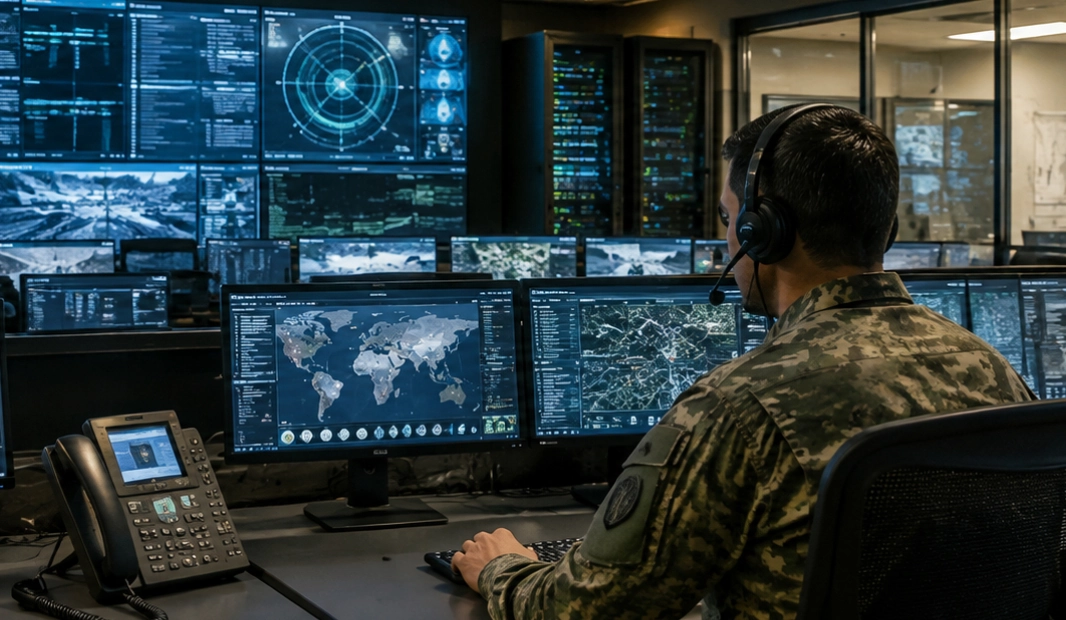
Control rooms have gotten more complex, not less. A single operator might manage radio, satellite, and IP conversations at the same time, each with its own device, its own recording system, and its own interface to watch. The more fragmented that setup is, the more likely something gets lost: a delayed response, a detail that turns into a game of Chinese whispers by the time it reaches whoever needs to act on it.
We don’t ask you to rip out and replace what’s already there. Whatever mix of connectivity a control room is running, whether that’s ISDN lines, analog, hotlines, SIP trunks, digital circuits, or even SCADA systems monitoring physical infrastructure, we pull all of it into a single operator view. The operator isn’t switching between screens or devices to figure out who said what, on which line, a minute ago. It’s one system to watch, one system to record from, and one less place for a critical detail to fall through the cracks.
For industries like healthcare, media broadcast operations, and public services, where response time often matters most, that consolidation is the core of what we offer.
Where Unicom Infotel Fits In
Mission-critical communication isn’t an off-the-shelf install. It has to be scoped around how your floor or control room actually operates: how many turrets, what compliance requirements apply, what your existing infrastructure looks like, and what needs to talk to what.
Unicom Infotel works with organizations across BFSI, manufacturing, defense, healthcare, media, and services to assess where a purpose-built trading and dispatch communication system fits, design the right configuration, and manage the deployment end to end, so trading desks and control rooms get a communication system built for the pressure they actually operate under, not a general-purpose one stretched to fit.
Interested in Our Solutions? Talk to Us
Drop in a query, start a conversation, or connect with the nearest UNICOM INFOTEL office, and we’ll take it forward from here