

CLIENT SNAPSHOT
Old hardware. New expectations.
A multi-block Business school with campus spanning classrooms, offices, and common areas.
It spread across several floors and was running on a patchwork of legacy network gear which were reliable once, but are past their shelf life now.
As device density on campus grew, the network started showing its age.
PROJECT OVERVIEW
| Before | After |
| Two networks operating as one. | One unified network. |
| Single point of failure at the network edge. | High-availability firewalls remove the single point of failure. |
| Limited capacity for growing network demand. | Multi-gigabit access points, high-speed uplinks support future growth. |
| Limited traffic segmentation. | VLAN segmentation isolates staff, student, and guest traffic. |
| Fragmented, hardware-specific management. | Single cloud dashboard for centralized management. |
| Limited scalability. | Architecture built to scale with future expansion. |
THE CHALLENGE
A campus that had outgrown its own network infrastructure.
The campus grew organically over the years and so did its existing networking environment.
The switching and wireless infrastructure was a mix of end-of-life, end-of-support hardware laid down in phases, with a newer set of access points added on top under a different management architecture.
The result was two networks pretending to be one.
With different access point generations running under different management systems, seamless roaming across campus simply wasn’t possible.
Every time a student or staff member moved from one zone to another, they’d drop off Wi-Fi and have to re-authenticate. A small annoyance but it added up to a real drag on day-to-day teaching and administration. On top of that, the wired network was largely unmanaged, with no VLAN segmentation to separate staff, student, and guest traffic. This created a gap that hindered security and the network’s ability to accommodate increasing traffic.
OUR APPROACH
Not a hardware swap but a complete redesign
We started where every good network design should i.e.on-site, not on paper.
Our team walked the campus to map the existing infrastructure, understand coverage gaps, and see firsthand where switches, cabling, and access points weren’t pulling their weight.
From there, we ran a detailed Wi-Fi site survey and built a full heat map of the campus.
With that data in hand, we evaluated several design options against the campus’s functional needs and budget, and architected a cloud-managed network. This was built for keeping the campus size in mind where IT teams are stretched across multiple responsibilities and need infrastructure that runs itself as much as possible.
THE SOLUTION
From End-of-life to End-to-End
| 39 ACCESS POINTS DEPLOYED | HA REDUNDANT FIREWALL PAIR | Wi-Fi 6 NETWORK STANDARD | 1 UNIFIED DASHBOARD |
Cloud-managed
Switching and wireless are now managed through a single dashboard.
It handled configuration, monitoring, and troubleshooting from one pane of glass, instead of juggling separate consoles for separate hardware generations.
Firewall
A next-generation firewall pair deployed in high availability forms the security perimeter, eliminating single points of failure while giving the network room to grow.
Access layer
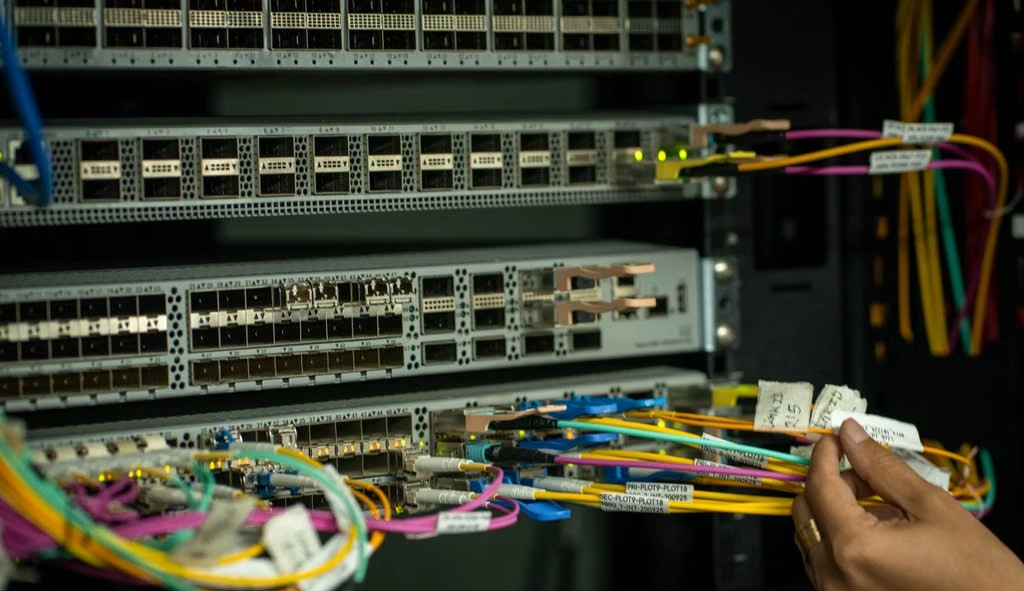
PoE switches handle wired connectivity for endpoints and access points alike, with high-speed fiber uplinks and multi-gigabit ports feeding the access points.
This way the wireless layer never bottlenecks at the switch.
Wi-Fi 6
Access points were selected and placed by use case (compact units for cabins and offices, higher-capacity units for classrooms).
They were deployed strategically and not conveniently as per the data obtained from the heat maps.
Segmentation
Staff, student, guest, and administrative traffic now sit on separate VLANs, closing off a gap the old unmanaged network had left wide open.
Client identity withheld per customer confidentiality agreement.